

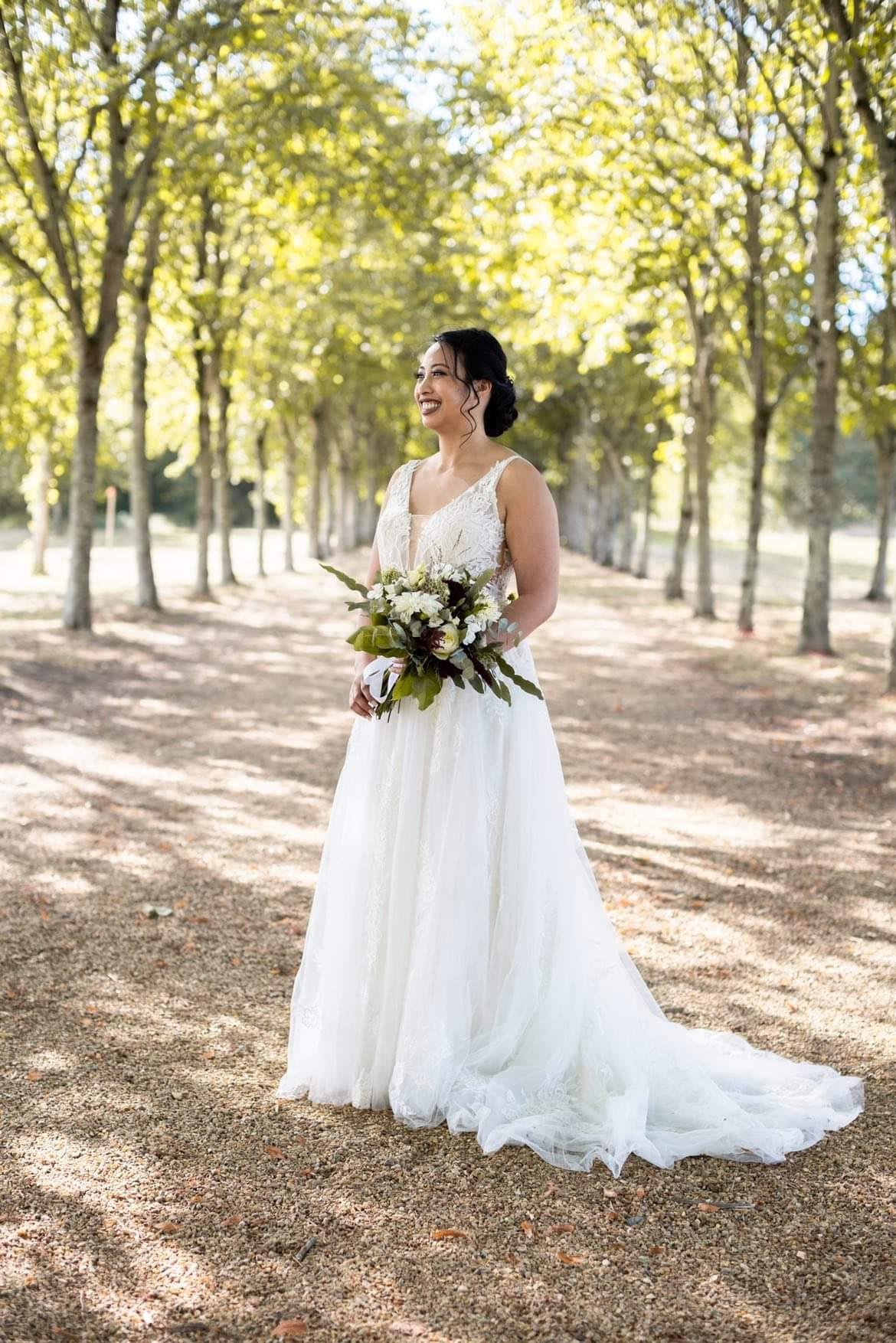
“Just a hem” is one of the most common phrases we hear, and one of the most misunderstood. On a wedding gown, the hem is rarely one hem. It is several layers, each with its own fabric, finish and length, that have to move together as one.
Here is what goes into hemming a bridal gown properly.
Why a bridal hem is different
A typical gown might have a lining, a layer or two of tulle or crinoline for volume, and an outer layer of satin, chiffon or lace. Each one is shortened separately, and each sits at a slightly different length so the layers don’t peek out or catch on each other as you walk.
The goal is a hem that just clears the floor at the front in your wedding shoes, so you can walk without kicking the fabric, while the sides and back fall gracefully into the train.
Lace hems
Many gowns finish with a scalloped or eyelash lace edge. That edge can’t simply be cut off, or the gown loses its finish.
Instead, we remove the lace border by hand, shorten the skirt beneath it, then re-apply the border at the new length. On some gowns, individual motifs are lifted and re-placed so the pattern still flows naturally around the hem. It is detailed handwork, and it is what makes the change invisible. On a few gowns, the better route is to shorten the skirt from the waist instead, so the original lace hem is never touched.
Horsehair braid
Horsehair braid is a stiff, sheer band sewn into the hem of many gowns. It gives the hem structure and stiffness, and keeps it from collapsing. It comes in different widths, depending on the look the gown needs.
When the gown is shortened, the braid is removed and re-attached at the new length. If it isn’t, the skirt loses its shape and the hem can look limp or uneven.
Beaded and embellished hems
How we handle beading depends on how your gown is designed.
When the beading is part of a lace appliqué, the beaded lace is removed as one piece and hand-stitched back on at the new length, the same way we re-apply lace.
When beads run through the area we’re working on, we break some of them with a hammer. It sounds dramatic, but it protects your gown. Breaking a bead leaves the thread that holds the beads around it untouched, so the rest of the beading stays secure and nothing unravels. It lets us stitch safely without re-beading the whole area.
Fabric by fabric
- Satin and mikado. Finished with a clean hem, often supported with horsehair braid or a facing so the skirt keeps its body. These fabrics show every needle mark, so precision matters.
- Chiffon. Usually finished with a fine rolled hem that keeps its lightness and movement.
- Tulle. Often left with a clean cut edge, because tulle doesn’t fray. The skill is in cutting each layer perfectly even.
- Crepe. A soft, weighty fabric that needs a careful hem to hang straight without puckering.
What about the train?
Most brides want the front shortened and the train kept. We hem the front and sides to your shoes, then blend the line smoothly into the train so it still sweeps behind you. Your bustle is planned at the same time, because the train’s length decides how it will lift for the reception. See our guide to wedding dress bustles.
Bring your shoes to every fitting
The hem is measured to the heel you’ll wear. Even half an inch of difference changes how the gown falls. If your shoes haven’t arrived, bring a pair with the same heel height, and tell us.
Timing and cost
Hemming is part of our bridal alterations, which typically range from $900 to $1,400 depending on your gown. Plan your first fitting two to three months before the wedding. See our bridal alterations timeline.