

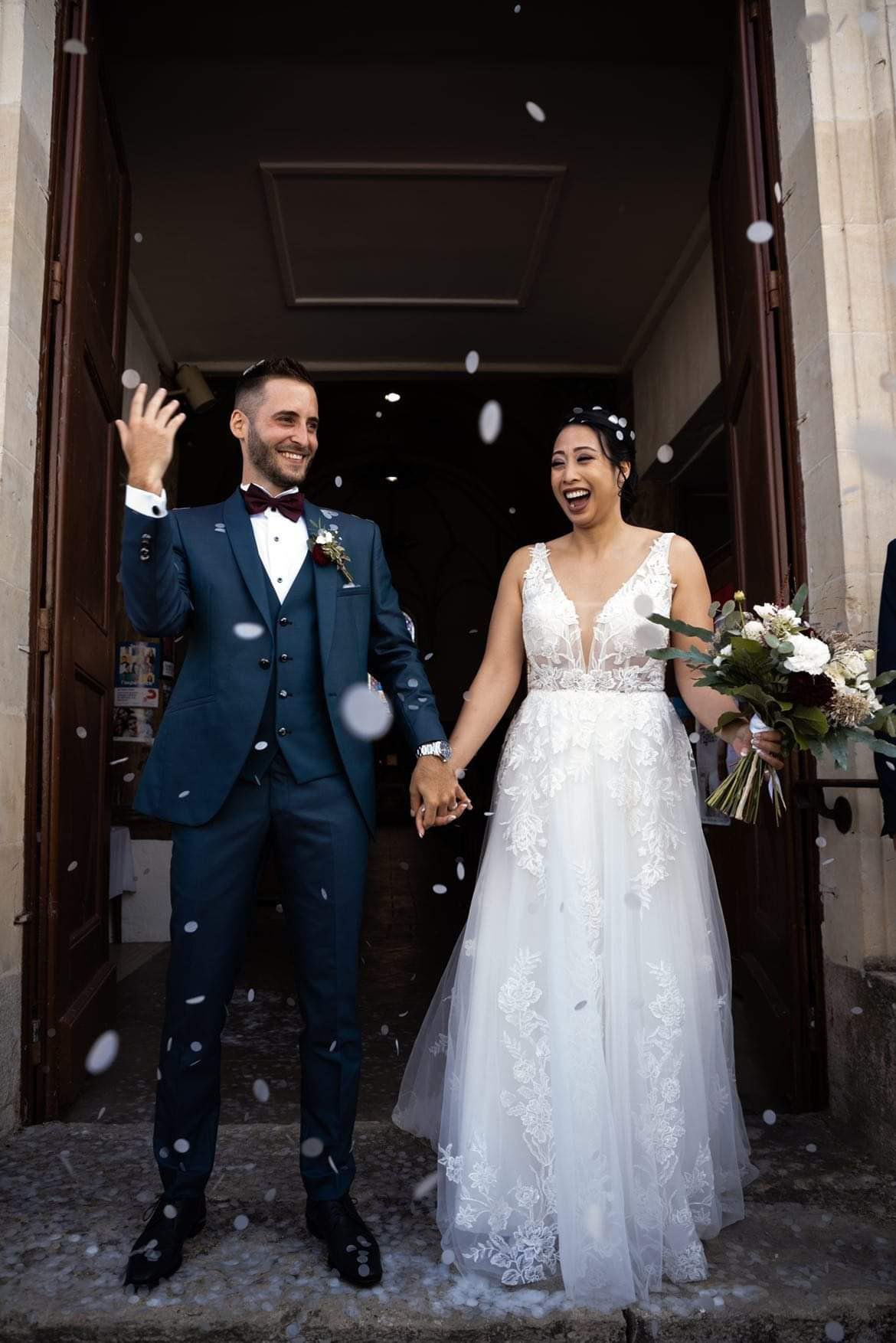
Lace appliqués are individual lace motifs, cut out and sewn onto a gown one by one. Done well, they look as if they were always part of the dress. They can soften a plain skirt, cover a sheer neckline, add detail to a back, or hide the traces of other alterations.
What brides use appliqués for
- Extending lace onto the skirt so the bodice detail flows down into the tulle.
- Covering a sheer plunge or illusion panel for more coverage without changing the neckline shape. Our post on changing your wedding dress neckline covers the bigger neckline changes.
- Building straps or sleeves from lace that matches the gown. See adding sleeves for a winter wedding.
- Re-laying lace after a fitting change. When a lace bodice is taken in, the lace across the seam is lifted and re-laid so no seam line shows.
- Repairing damage, and re-beading sections that have lost their beads.
Matching the lace
You bring the lace, and we help you judge the match. Look at it in daylight against the gown: ivory, champagne and nude linings all change how white lace reads. Lace styles matter too. A heavy corded lace placed beside a fine, flat lace looks pasted on.
How appliqués are placed and sewn
We plan the placement on you at a fitting, so the design follows your body and the line of the dress, then check the pinned motifs on you again before anything is sewn. Each motif is then sewn on by hand. On beaded lace, the beads and sequins along the cutting line come off before the motif is cut, then go back on one at a time so none work loose.
Appliqué work takes time, and it is quoted in person once we see the gown and the lace. Mention it at your first fitting so it fits into your alterations timeline.