


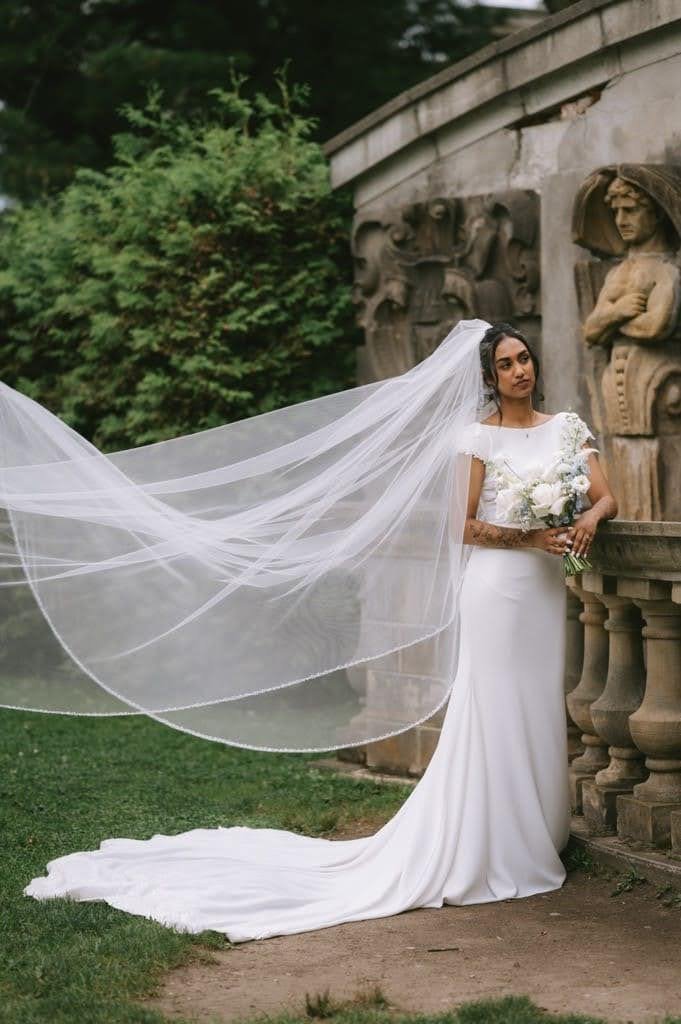
A wedding dress can be beautiful on the hanger and still need something more to feel unmistakably yours. Sometimes that means changing a neckline, adding sleeves or creating a removable overskirt. Sometimes it means rethinking how the gown moves from ceremony to reception. The exciting part is the vision. The technical responsibility is understanding what the dress can safely become – and how to get it there without losing the shape, support or finish that made you love it in the first place.
That is the heart of bridal customization. It is not simply adding a detail to a finished gown. It is design work carried out inside an existing structure. Every decision must account for the fabric, internal construction, weight, balance, fit and movement of the dress. When those decisions are made well, the result looks as though it always belonged to the gown.
For brides researching bridal dress customization in Toronto, this guide explains what true customization involves, what may be possible, and why technical judgment matters just as much as beautiful sewing. Brides searching for wedding dress customization in Toronto should expect the process to begin with the gown itself, because its construction determines which ideas can be executed successfully.
Beyond Standard Alterations: What Bridal Customization Really Means
The Difference Between Alterations and Customization
Standard wedding dress alterations refine the fit of an existing design. Common examples include hemming the skirt, shaping the bodice, adjusting straps and creating a bustle. These services can still be highly technical – especially on lace, beaded or multi-layered gowns – but the goal is usually to preserve the designer’s original concept while making it fit the bride.
For brides comparing wedding dress alterations in Toronto, this distinction is important: an atelier may be highly experienced in fit adjustments without offering the design development or reconstruction required for complex customization.
Customization changes the design itself. It may introduce a feature that was not originally part of the gown, remove or reshape an existing element, or give one dress more than one look. Adding sleeves, raising a neckline, closing a plunge, converting a zipper back to a corset, creating an overskirt or developing detachable components all fall into this category.
The distinction matters because a design change can affect far more than the area you see. Adding sleeves is not simply a matter of attaching fabric at the shoulder. The sleeve shape, armhole or attachment area, available support and required range of motion must be developed together. If the pattern is incorrect, the sleeve may pull the bodice, restrict movement or fail to stay in position. A deeper or higher neckline may alter the support and edge finish of the bodice, while removing weight from a skirt can affect its balance and drape. Custom bridal alterations in Toronto should therefore begin with an assessment of the entire garment, not an isolated request.
Why Technical Skill Matters in Bridal Customization
Understanding Garment Construction and Fabric
Before a customization is recommended, the gown must be examined beneath the visible surface. Bridal gowns may include fashion fabric, lining, tulle, horsehair braid, lace appliques, boning, bra cups, interfacing, seam tape and multiple support layers. These parts work together, and changing one can affect the others.
Fabric behaviour is equally important. Many satin-faced fabrics can show needle marks, seam impressions or puckering, although the degree depends on the fibre, weight and finish. Chiffon is light and fluid but can shift, stretch or distort while being handled. Tulle can be nearly invisible at one edge and more noticeable when layered or finished differently. Lace may need to be lifted, repositioned and hand-applied so a new seam disappears into the original pattern. Heavily beaded fabric often requires beads to be removed before stitching and secured again afterward so the seam lies flat and the embellishment does not unravel.
Grain also matters. A woven fabric cut on the bias has more natural give and behaves differently from the same fabric cut on the straight grain. This can affect how a new panel, sleeve or skirt section stretches, drapes and settles against the original gown. A skilled bridal specialist does not choose material by colour alone. Fibre, weight, transparency, surface texture, movement and support must all be considered.
Then there is the order of construction. Many gowns are assembled from the inside out. A seam that appears easy to reach may sit beneath boning, lace or several joined layers. To change it cleanly, part of the gown may need to be carefully opened, altered and rebuilt in sequence. That invisible work is often what allows the finished customization to look original rather than added on.
Knowing What Can and Cannot Be Changed
One of the most valuable skills in bridal gown customization is knowing when to say yes, when to propose a different route and when a request may compromise the dress. Most gowns can be customized in some way, but not every idea is suitable for every construction.
We assess questions such as:
- Is there enough seam allowance or suitable fabric to make the proposed change?
- Will the bodice still support the bust after the neckline, back or straps are altered?
- Can the lace or bead pattern be continued naturally across the new area?
- Will a detachable piece stay secure while remaining comfortable and easy to remove?
- Could the change restrict sitting, walking, raising the arms or dancing?
- Can the new material be matched closely enough in colour, texture, weight and sheen?
- Will the finished work tolerate the weight and tension placed on that part of the gown?
A photo can communicate your goal, but it cannot reveal everything about your dress. Two gowns with a similar silhouette may have completely different internal structures. That is why responsible recommendations and final pricing are made after the gown is examined in person.
What Can Be Customized on a Wedding Dress?
Sleeves, Trains, Overskirts and Necklines
A thoughtful customization can make a gown feel more personal, more functional or both. Depending on the dress, possibilities may include:
- Adding fitted, flutter, cap or detachable sleeves
- Reshaping straps or creating an off-the-shoulder detail
- Raising, lowering or softening a neckline
- Closing a plunge with illusion tulle, lace or a lined insert
- Adding coverage or lining to a sheer bodice
- Converting certain zipper-back gowns to a corset-style closure where the bodice construction can support it
- Adding, shortening or reshaping a train
- Creating a removable overskirt, cape, topper or other detachable layer
- Reworking lace placement, appliques or selected embellishment
- Creating accessories from compatible or recovered fabric
Each option comes with its own engineering. Sleeves need sufficient mobility and a correctly balanced pattern. A long overskirt needs balanced volume and secure attachment points. Adding neckline coverage may sometimes be achieved with illusion material, lining or applique placement. Lowering a neckline can be more restrictive because it may require cutting the original fabric and modifying the support structure. Even a seemingly small detail can require pattern work, fittings, hand finishing and careful testing.
Material matching is another important limitation. Even when a fabric is described as ivory or white, its undertone, sheen and transparency may differ from the original gown. An exact match can be difficult when a dress is discontinued, made from proprietary material or has changed slightly with age. When an exact match is unavailable, the goal is to select a material that looks intentional with the entire gown rather than focusing on colour alone.
An Example of How Construction Changes the Recommendation
Imagine a bride who wants fitted lace sleeves added to a strapless gown. The inspiration photo may appear simple, but the gown must first be assessed for a stable attachment area, appropriate support and sufficient room for comfortable arm movement. The lace must also coordinate with the gown’s motif, scale, colour and density. Depending on the construction, the strongest solution may be a fully integrated sleeve, a detachable sleeve or a separate topper. The correct recommendation comes from the actual gown – not from copying the photograph literally.
Ceremony-to-Reception Transformations
Many brides want the drama of one look for the ceremony and greater freedom for the reception. A detachable overskirt can add volume or a train, while removable sleeves, straps, bows, capes or toppers can change the mood without requiring a second dress.
The best transformations feel intentional in both forms. The base gown should look complete after the detachable element is removed, and the attachment system should be discreet, secure and placed where the dress can carry the load. We also consider how quickly the piece can be changed, whether help will be required, and how the gown will move afterward. A successful two-look design is not only photogenic; it works during the real sequence of the wedding day.
The Ideal Mrs. P Stitches Bride
A Bride Who Values Personalization and Craftsmanship
The ideal Mrs. P Stitches bride does not need to arrive with a technical vocabulary or a fully resolved design. She may have found the perfect silhouette but want more coverage, wish to incorporate a meaningful piece of lace, or want one gown to create two distinct wedding-day looks. She may bring reference photos, a sketch or simply the feeling that something is missing. What matters is that she values collaboration, craftsmanship and an honest assessment of her gown.
She understands that customization is a process. The first idea may evolve once we study the dress on her body. Fabric may need to be sourced. A mock-up or temporary placement may be used to judge proportion. More than one fitting may be needed to refine the shape, check movement and complete the hand finishing.
Most of all, she wants the finished gown to feel personal without looking forced. Our goal is not to add complexity for its own sake. It is to identify the changes that serve the bride, respect the dress and create a cohesive result.
The Bridal Customization Consultation
From Your Vision to the Final Design
A productive consultation begins with the gown itself. Bring the dress, the shoes or heel height you expect to wear, and any undergarments or shapewear you intend to use, if applicable. Many bridal gowns contain built-in support, so the alteration specialist can also advise whether an additional foundation garment is necessary. Reference images are helpful, particularly when you can explain what you like about each one: the coverage, softness, silhouette, drama or ability to remove a feature later.
During the appointment, we examine the gown inside and out. We assess its seams, internal support, fabric layers, embellishment and existing fit. We then consider how the requested change will interact with your proportions and how you need to move. When useful, fabric or lace can be placed temporarily so you can see the scale and direction before the design is finalized.
From there, we define the scope of work, likely fitting schedule, materials and price. Complex customizations often need more lead time than standard wedding dress alterations because they may involve design development, sourcing, patternmaking, structural work and hand finishing. Booking early creates more room for thoughtful decisions and reduces the risk that material availability or a compressed fitting schedule will limit the design.
Bridal Dress Customization in Toronto
Toronto brides have access to gowns from many designers, eras and construction styles. That variety is exciting, but it also means bridal customization cannot be treated as a one-method service. A minimalist crepe gown, a beaded lace mermaid dress and a layered tulle ball gown will each demand a different approach.
At Mrs. P Stitches, wedding dress customization in Toronto is approached from both a design and construction standpoint. Every recommendation considers how a change looks, how it is supported, how it moves and whether it can be finished to the standard of the original gown. This work is for the bride who wants more than a dress that simply fits. She wants a gown that feels considered, personal and technically sound.
Considering a bridal gown transformation? Book a consultation with Mrs. P Stitches and bring your gown, inspiration photos and wedding date. The team will assess the construction, explain what is realistically possible and develop a customization plan around your vision.
CTA button Book a Bridal Customization Consultation
Frequently Asked Questions
What is the difference between bridal alterations and customization?
Alterations primarily adjust the fit or function of the existing gown, such as hemming, taking in the bodice, adjusting straps or adding a bustle. Customization changes or adds to the design, such as creating sleeves, changing a neckline, adding an overskirt or developing detachable elements. Some projects include both.
Can any wedding dress be customized?
Most wedding dresses can be customized in some way, but not every change is appropriate for every gown. The answer depends on the fabric, seam placement, internal support, embellishment, available material, current fit and the scale of the requested change. An in-person assessment is the most reliable way to determine what is possible.
What parts of a wedding dress can be customized?
Common areas include sleeves, straps, necklines, backs, bodice coverage, trains, overskirts, lace placement and detachable accessories. The safest and most natural-looking option depends on how the dress is built and how the change will affect support, proportion and movement.
How early should I book bridal customization?
For meaningful design changes, contact the atelier as soon as you have the gown and your wedding date is confirmed – ideally four to six months before the wedding. Extensive customization or a peak-season wedding may require even more lead time because material sourcing, pattern development and multiple fittings may be involved. The exact schedule should be confirmed after the gown is assessed.
Is bridal customization more expensive than standard alterations?
It often is because customization can involve design planning, patternmaking, specialty materials, structural reconstruction, handwork and additional fittings. The price depends on the gown and the complexity of the change rather than the name of the feature alone. A detailed quote should follow an in-person assessment and a clearly defined scope.
A Final Note on Successful Bridal Customization
The most successful customization is not necessarily the biggest transformation. It is the one that looks right on the bride, functions throughout the day and belongs naturally to the gown. That result comes from listening closely, planning carefully and respecting the garment at every stage.
Your wedding dress does not need to begin as the exact dress you imagined. With the right construction, materials and technical judgment, it can become a version that feels entirely your own.